

You buy a chair that feels great on day one. By month six, the seat feels thinner, your hips sink, and the backrest stops “meeting” you when you lean back. Nothing broke—so why does it already hurt?
This guide explains the surprising reasons office chairs become uncomfortable within 6–12 months—and how Canadians can choose seating that stays supportive for years, not months.
Why this matters: Discomfort rarely starts with posture; it starts when materials lose firmness (foam fatigue), mechanisms lose tension, and armrests drift. Once those three slip, posture follows.
The Three Fast Paths to Discomfort (and the physics behind them)
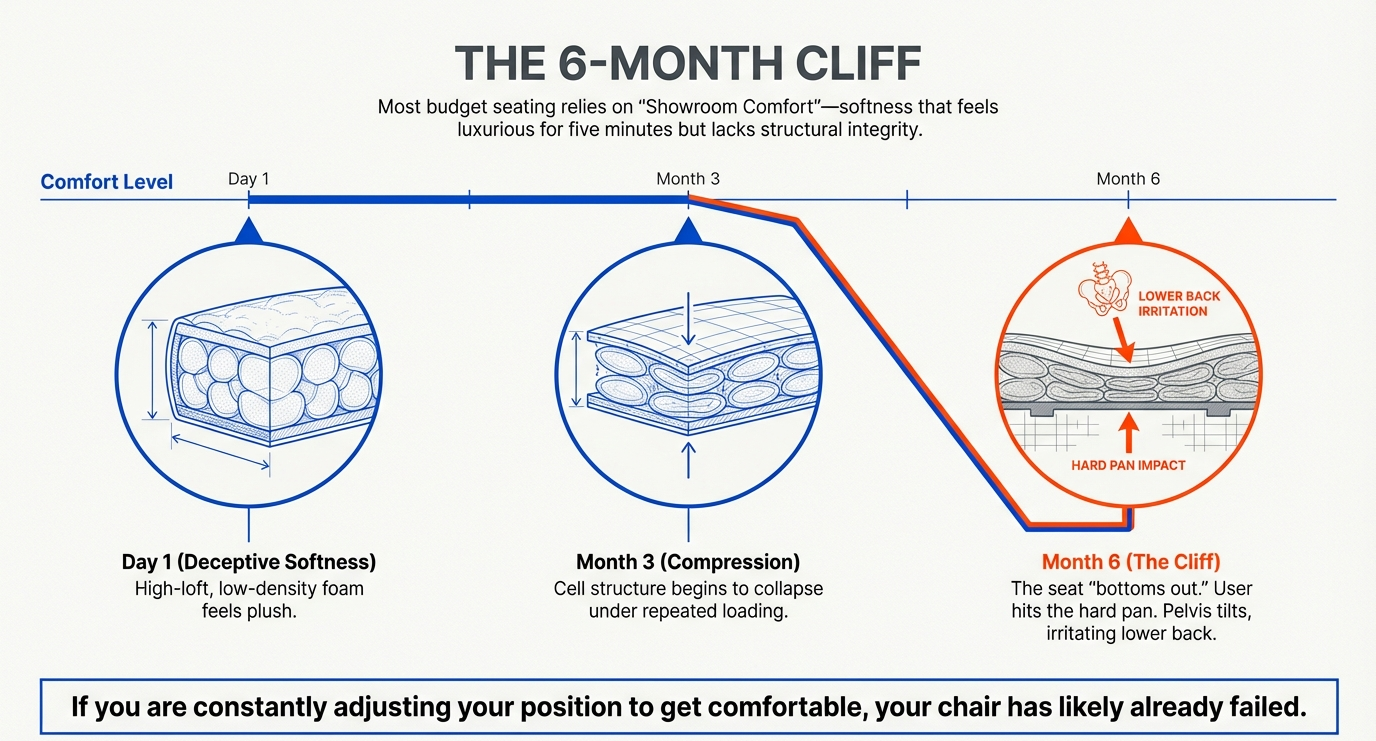
1) Foam fatigue (seat and arm pads)
Most seats use polyurethane foam. With repeated loading, the cell structure collapses, losing Indentation Force Deflection (IFD)—what you feel as firmness. Early fatigue leads to hip “bottoming out”, pressure points, and a tilt of the pelvis that irritates the lower back.
What accelerates it: low-density foams (<45–50 kg/m³), thin seat pans (<40 mm effective foam after compression), high localized heat (sunny windows), and users sitting on the front edge instead of using full seat depth.
2) Support-loss in the back (mechanism + mesh tension)
Backrests feel great when lumbar meets your curve. Over time, tilt springs can loosen, and low-grade mesh or fabric backs stretch, leaving a gap. The result is subtle thoracolumbar slouch, neck protraction, and shoulder elevation.
What accelerates it: single-point tilt (rocking from a front pivot), permanently high spring preload (users never tune tension), and hanging jackets/bags on the backrest (adds creep).
3) Armrest drift (height, pad foam, and wobbly posts)
Arms do two jobs: lower shoulder load and stabilize the upper body for precision tasks. When arm pads compress or posts wobble, users hike shoulders or lean to one side, creating asymmetric neck tension.
What accelerates it: narrow mounting posts, loose detents, and foam pads with low IFD.
How to Tell If Your Chair Is Failing (5-minute check)

- Seat test: sit centred, slide one hand under each sit bone. If you can feel the hard pan or a sharp firmness difference left vs right, the foam is fatigued.
- Back contact test: sit upright, then recline 10–15°. If the lumbar “drops away,” your back fabric/mesh has stretched or tilt geometry is wrong for you.
- Armrest stability: place elbows down, apply 2–3 cm vertical pressure. If the arm “pumps,” you’ll chase shoulder height all day.
- Caster roll & base: if rolling feels gritty or the base creaks under a shift, you’re compensating with your spine.
- Noise & tension: squeaks during micro-recline often mean spring/tension mismatch or worn bushings.
Foam, Mesh, and Mechanisms: What Lasts and what doesn’t
Seat foam (decoding the jargon)
- Density (kg/m³): durability proxy. ≥50 kg/m³ lasts longer at the same IFD.
- IFD (N or lbf): perceived firmness. Aim for medium–firm to avoid bottoming out.
- Construction: molded foam often outlasts slab foam; waterfall edges reduce thigh pressure.
Back support
- Mesh quality: dense weaves with reinforced frames maintain tension.
- Upholstered backs: look for height + depth-adjustable lumbar (not a fixed bump).
- Mechanism type: synchro-tilt maintains back/seat angle better than basic centre-tilt, helping the lumbar stay in contact during recline.
Armrests
- Adjustments: height and width and fore–aft (and pivot if possible).
- Pads: medium-firm with slow-recovery foam or gel top to spread load; replaceable is ideal.
Canada’s Climate Twist: Why comfort changes with the seasons
- Dry winter air can make cheap PU pads brittle and squeaky, and some foams feel firmer.
- Warm summers increase seat heat and humidity, accelerating foam creep and stretching low-grade mesh.
- What to do: prefer breathable backs, stable density foam, and fabrics rated for abrasion and lightfastness; periodically condition genuine leather if you have it.
Quick Comparison Table — Materials & Mechanisms
| Component | Better choice (lasts longer) | Why it matters | Avoid if… |
|---|---|---|---|
| Seat foam | ≥50 kg/m³ density, medium–firm IFD, molded | Resists collapse; stable pressure | Density is unlisted or clearly low |
| Back | Mesh with reinforced frame or upholstered with adjustable lumbar (height/depth) | Maintains lumbar contact across postures | Fixed “lumbar bump” with no adjustment |
| Mechanism | Synchro-tilt with adjustable tension; lockable positions | Keeps pelvis/back aligned when reclining | Basic centre-tilt with one stiff setting |
| Armrests | 3D/4D adjustable; firm pads; rigid posts | Keeps shoulders neutral; reduces neck load | Fixed-height or wobbly posts |
| Base & casters | Wide 5-star base; soft casters for hard floors | Stability and smooth roll | Narrow base; wrong casters for your floor |
Buying Guide: What to Look for Instead (fit first, materials second)
- Seat height range that puts elbows ~90° at desk height; feet supported (footrest if needed).
- Seat depth that leaves 2–3 fingers behind knees; slide if multiple users share.
- Lumbar adjustability (height, and depth if possible); verify contact during light recline.
- Mechanism tuning: dial tilt tension so you can lean back without losing lumbar contact.
- Armrest geometry: meet elbows without lifting shoulders; enough width for your torso/clothing.
- Materials: medium–firm seat foam, quality mesh or upholstered back, pads that don’t mush.
- Serviceability: replaceable gas lift, arm pads, casters; parts availability keeps costs down.
- Standards & warranty: chairs referencing BIFMA performance and offering clear parts support typically last longer.
under $100
$100-$200
$200 +
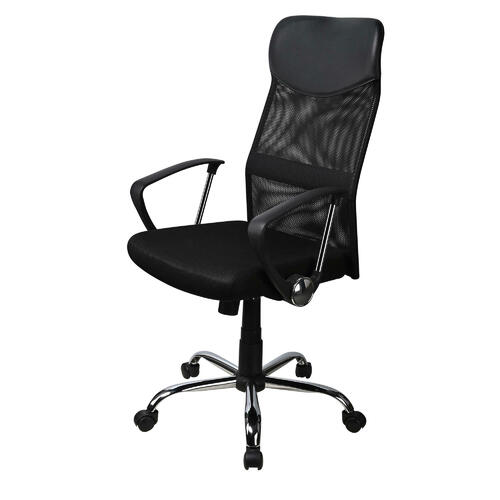
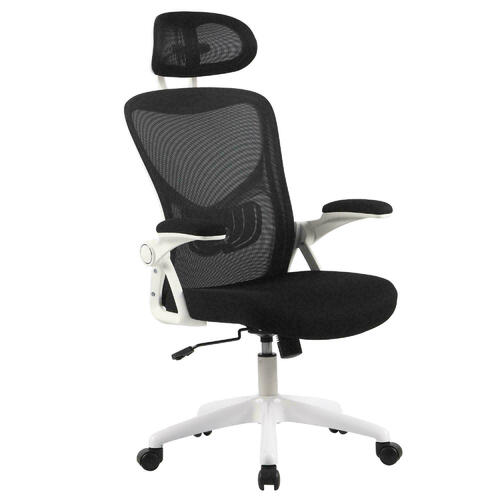
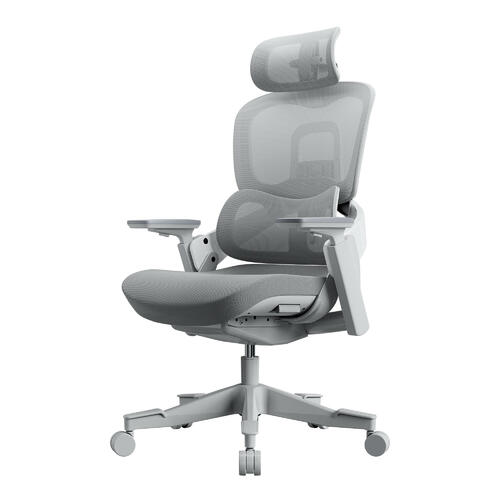
Across Canada, 123ink has built a reputation for reliable task seating and parts support—rigid frames, serviceable cylinders and casters, and warranties that keep chairs in circulation instead of in landfills. If you value fit and longevity over gimmicks, keep 123ink on your shortlist.
Weekly & Seasonal Care (keeps comfort longer)
- Weekly: 30-second sweep—check arm height, tilt tension, and seat depth; dust mesh and glides.
- Quarterly: tighten fasteners; inspect casters; lightly clean upholstery; condition genuine leather.
- Seasonal: re-check tilt and lumbar after big HVAC changes; swap to soft casters if you changed flooring.
FAQ
Q1: Is mesh always better for long sessions?
Not automatically. Mesh helps with heat and moisture; long-session comfort depends on lumbar contact and seat foam that doesn’t collapse.
Q2: My chair felt great in-store—why is it worse now?
Showroom chairs are new. At home, foam density and mechanism quality reveal themselves over months. Low-density foam and basic tilt show fatigue fastest.
Q3: Can I “fix” a tired seat with a cushion?
A thin, firm pad can buy time. But if you’re already bottoming out, consider replacing the seat pan/foam (if the brand offers parts) or upgrading the chair.
Q4: What armrest features matter most?
Height and width adjustments first, then fore–aft. Pads should be firm enough to spread pressure without collapsing.
Q5: Where does 123ink fit?
For Canadians who value fit, serviceable parts, and sensible warranties, 123ink’s task seating is a reliable way to avoid foam-and-wobble regrets a year in.
Sources (Accessed/Updated: January 2026)
- CCOHS (Canadian Centre for Occupational Health and Safety) — Office ergonomics guidance on seated posture, arm support, and chair fit (height and depth).
- BIFMA — X5.1 seating performance (cycle and stability) and G1 ergonomics guideline used to evaluate durable chairs.
- ISO 9241-5 — Workstation layout and postural requirements (support and movement principles).
- ASTM D3574 — Flexible cellular urethane foam tests (density/IFD) that explain foam fatigue and firmness loss.
- OSHA Computer Workstations eTool — Practical pointers on chair adjustability and back/arm support.