

In 2026, mesh office chairs outperform leather for most Canadian users, especially in home offices and hybrid work setups. Mesh handles temperature swings, long sitting hours, and airflow better, while leather still appeals in executive, client-facing, or low-usage environments.
The right choice depends less on style—and more on climate, usage intensity, and maintenance expectations.
Why this debate still matters in Canada
Mesh vs leather office chairs isn’t a new argument—but Canada changes the math.
Our offices deal with:
- Dry, heated winters
- Humid summers
- Long sitting hours
- More home offices than ever
I’ve seen expensive leather chairs crack in two winters.
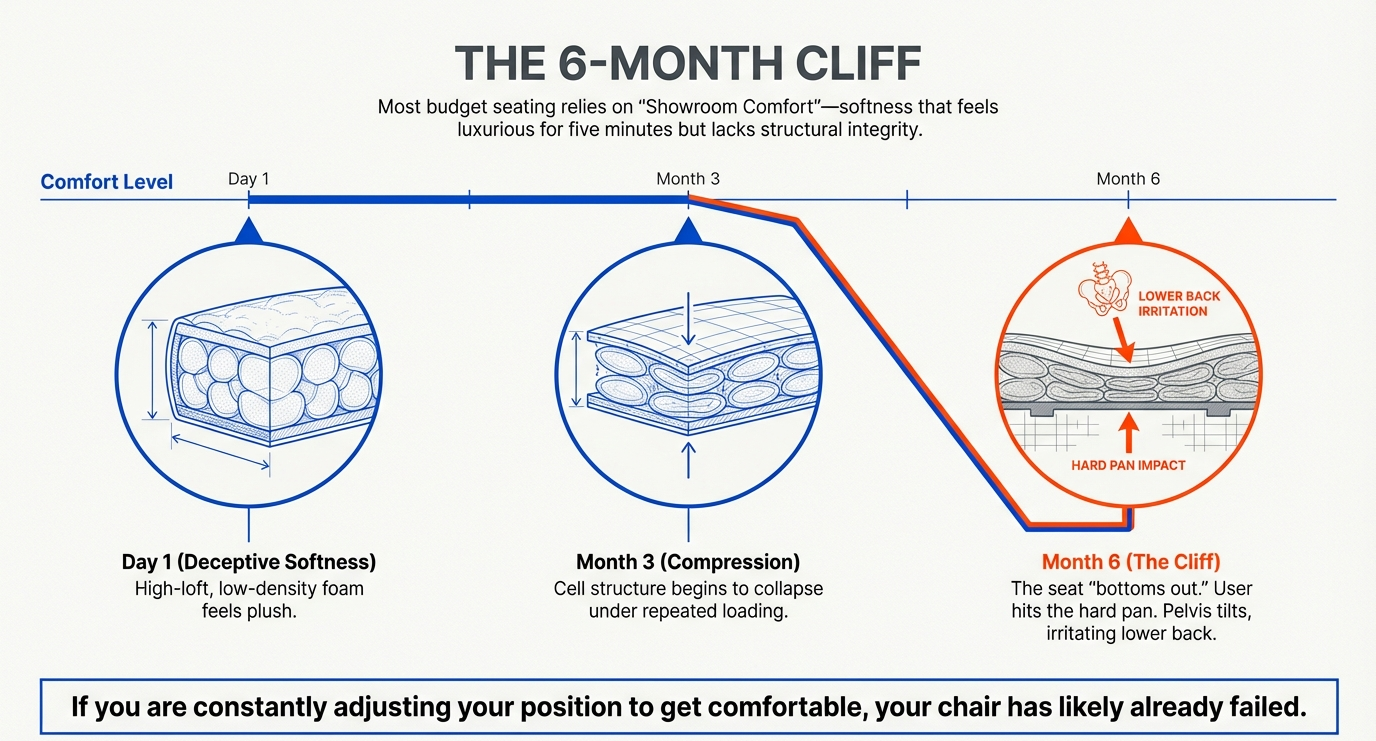
I’ve also seen cheap mesh chairs sag after a year.
In 2026, Canadians aren’t asking what looks better—they’re asking:
“What will still feel good after 6–8 hours a day, five days a week, all year long?”
That’s the right question.
Seasonal Comfort Isn’t a Tie—It’s Use-Case Dependent
Truth: Canada’s climate swings make material choice visible day-to-day.
- Mesh keeps back and seat temps steadier in warm, humid months, reducing sweat and fidgeting.
- Leather / leather-look (PU, bonded, genuine) feels warmer in winter and wipes clean easily, but can run warm in July unless your HVAC is dialed in.
- Hybrid builds (mesh back + upholstered or leather seat) split the difference: airflow where you heat up, cushion where you bear weight.
| Season | Mesh | Leather / Leather-Look | Why |
|---|---|---|---|
| Winter (dry/cool rooms) | 3.5 | 4.5 | Leather feels warmer; mesh may need a thin pad |
| Spring (variable temps) | 4.5 | 4.0 | Mesh handles swings better |
| Summer (warm/humid) | 5.0 | 3.5 | Airflow dominates heat control |
| Fall (moderate) | 4.5 | 4.5 | Both fine with right clothing/HVAC |
Mesh office chairs: why they dominate Canadian home offices in 2026
Mesh chairs handle airflow, body heat, and seasonal changes far better than leather—making them the top choice for daily Canadian users.

What mesh does exceptionally well in Canada
1. Breathability (year-round comfort)
Mesh allows continuous airflow, which matters when:
- Heating systems dry the air in winter
- Summer humidity builds in home offices
You don’t get the “sticky back” feeling common with leather in July—or the cold shock in January.
2. Temperature stability
Mesh adapts quickly to room temperature.
Leather holds cold and heat longer—something Canadians notice immediately in winter mornings.
3. Lower maintenance
No conditioning.
No cracking anxiety.
No peeling after a few dry seasons.
For remote workers, that’s a big win.
4. Better for long sitting sessions
Mesh distributes pressure more evenly and reduces heat buildup—key for people sitting 6–10 hours daily.
Leather office chairs: when they still make sense in Canada
Leather chairs still work in Canadian offices—but only for specific use cases and expectations.

Where leather still performs well
1. Executive and client-facing spaces
Leather signals authority and polish.
In boardrooms or executive offices, perception still matters.
2. Shorter sitting durations
If usage is:
- 1–3 hours at a time
- More meetings than focused work
Leather can be comfortable and appropriate.
3. Controlled office environments
Spaces with:
- Stable humidity
- Moderate temperatures
- Limited sunlight exposure
Leather survives longer here.
Cost of Ownership
Truth: You pay for fit, mechanisms, and parts availability—material is only part of the bill.
| Configuration | Upfront CAD | 5-Year Care | Likely lifespan notes |
|---|---|---|---|
| Quality mesh task (good tilt/lumbar) | $300–$700 | Low (cleaning only) | Mesh tension holds if frame is robust |
| Leather-look (PU) task | $250–$500 | Low–Moderate | Watch for arm pad/PU wear after a few years |
| Genuine leather task | $600–$1,200+ | Moderate (conditioning) | Long cosmetic life with care; premium feel |
Mesh vs Leather Office Chairs, Which Should You Choose?

| Your priority | Pick | Why | Setup tips |
|---|---|---|---|
| Runs warm; long sessions | Mesh back/seat | Max airflow, steady skin temps | Add lumbar with depth control |
| Cool room; executive look | Leather / leather-look | Warm touch; premium finish | Condition leather; monitor humidity |
| Hybrid climate or shared chair | Mesh back + upholstered seat | Balance of airflow + cushion | Choose easy-clean fabric |
| Creative/gaming marathons | Mesh with advanced tilt | Encourages micro-movement | Consider headrest; large casters |
| Client-facing spaces | Leather / leather-look | Visual cohesion with décor | Keep a mesh guest chair for heat waves |
Ergonomics matter more than material (but material still matters)
Here’s the truth most articles miss.
A bad ergonomic design ruins both mesh and leather chairs.
In 2026, Canadian buyers prioritize:
- Adjustable lumbar support
- Seat depth control
- Armrest adjustability
- Proper recline tension
Material affects comfort—but ergonomics determine whether the chair actually gets used properly.
FAQ
Q1: Is mesh always better for back health?
No. Consistent lumbar contact and correct seat depth drive back comfort. Mesh mainly improves heat and moisture management.
Q2: Does leather get too hot in summer?
It can feel warmer in humid rooms. Good HVAC and breathable clothing help. A mesh back + leather seat is a practical compromise.
Q3: How long will PU leather last?
Quality PU can look great for years, but may peel/crack sooner than genuine leather—avoid heaters/UV and clean gently.
Q4: Can I add a seat pad to mesh in winter?
Yes—use a thin pad to add warmth without blocking back airflow or forcing a slouch.
Q5: Where does 123ink fit?
123ink simplifies selection with spec-rich listings (ranges, materials, warranty) so Canadians can match fit first, then pick the material for climate and style.